Every year, the same pattern: students walk into Paper 3 with a polished paragraph about “the importance of reading,” then collapse when the examiner asks “Why for you?”
Memorised scripts sound brave in the bedroom. In the hall, they crack. Examiners aren't hunting perfect grammar — they're listening for whether you can keep the conversation alive when the prompt shifts.
This signal breaks the skill into four moves you can practise tonight. No full essay. No shame spiral. Just Say it · Say more · Say better.
Three exits that save a stuck answer
Restart clean
“Sorry — let me try that again.” Then one clear sentence. Examiners prefer a reset over a tangled mid-thought.
Buy one beat
“That's interesting — for me,…” buys you a breath without “erm erm erm.” Keep it short. Then land the point.
Anchor with because
Opinion + because + tiny example. “I prefer group study because my friends catch my mistakes — like when I mix up tense.”
Watch: intonation that sells confidence
Six minutes. Copy the rise at the end of each opinion — not louder, just clearer. Phone volume up, shame volume down.

Tonight's 8-minute loop
Set a timer. Phone face-down. One prompt only: “Do you prefer studying alone or with friends?”
Minute 1–2: Say it once, messy is fine. Minute 3–5: Say more — add because + one example from your actual life (tuition, WhatsApp revision, mamak table). Minute 6–8: Say better — drop one filler, lift the last word so it lands.
Record a voice note for your group chat if you dare. No grading. Just “I heard you keep going” — that's the win.
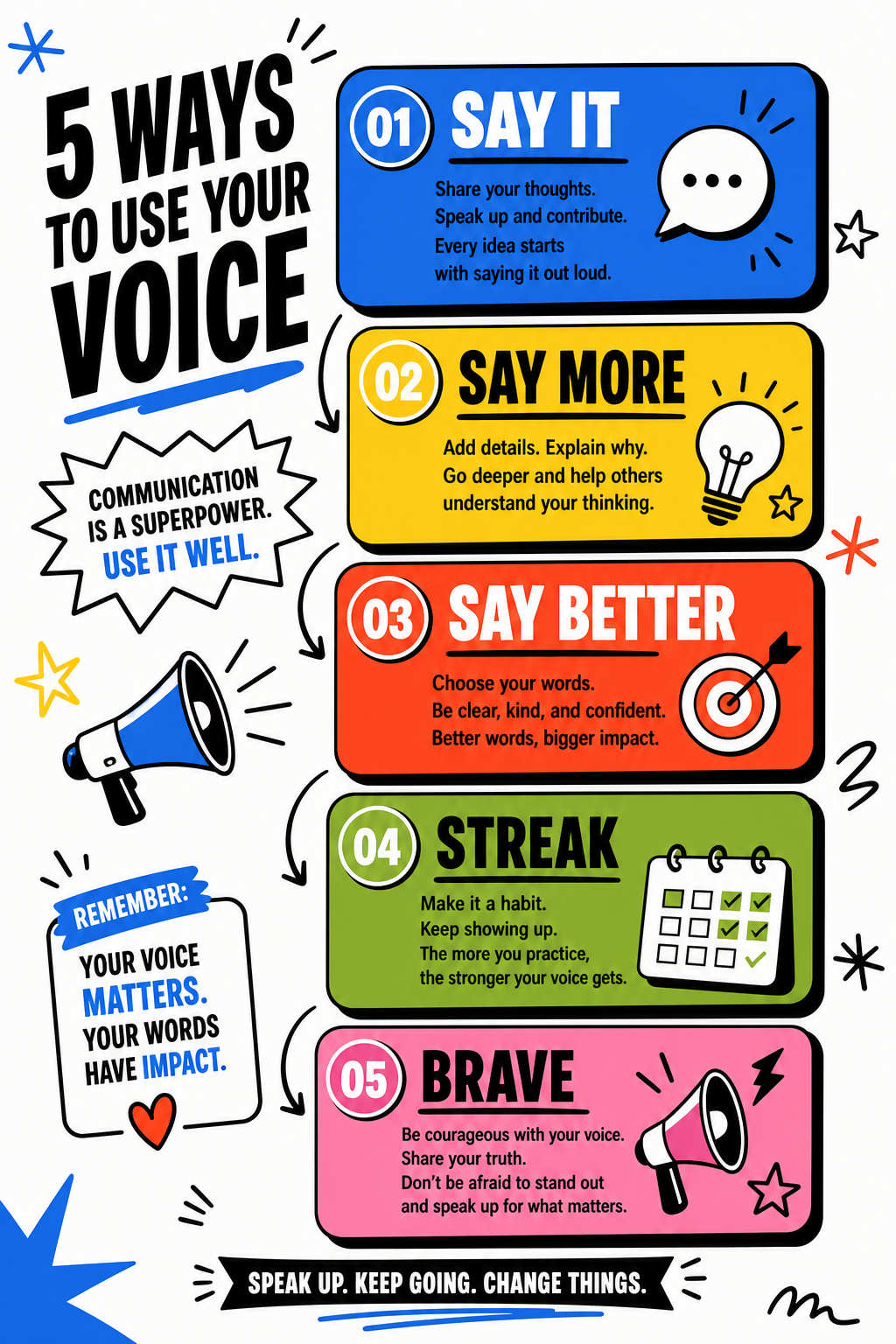
Scripts freeze. Systems flex. Keep three exits, two connectors, and one honest example. When Part 3 swings, you don't need a speech — you need a next sentence.
Progress isn't a mark on a mock. It's the night you restart clean instead of going quiet. That's the signal.